🎵 Key Takeaway
Stuck in C Major? To play complex songs (like Zelda tunes), you need "Black Keys" (Sharps and Flats). Learn how to use the tiny Sub-holes and the Half-hole technique to unlock new musical worlds.
You can play "Twinkle Twinkle." You can play "Amazing Grace."
But then you try to play a cool anime song or a jazz tune, and it sounds... wrong.
That's because you are only playing the "White Keys" of the piano. Today, we are going to learn how to play the "Black Keys" (Sharps # and Flats b).
The Secret of the "Tiny Holes"
Look at your 12-hole ocarina. Look at your two middle fingers.
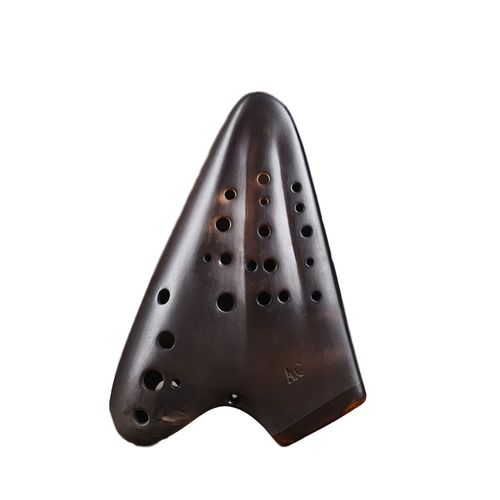
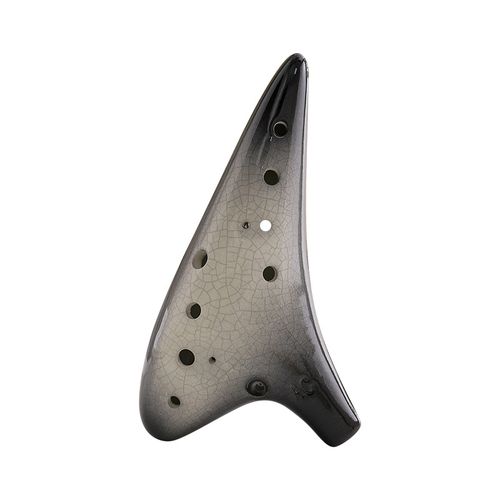
Do you see those tiny, extra holes next to the big ones? Those are called Sub-holes.
- Low A (La): Cover the big hole + the tiny sub-hole.
- Low Bb (A#): Cover the big hole, but uncover the tiny sub-hole.
This gives you that "in-between" note.
Precision Matters
Playing semitones requires sliding your fingers slightly. If your ocarina is too slippery, you will miss. The Ice Cracked Series has a textured glaze that gives you the perfect grip for these advanced techniques.
Shop Ice Cracked Ocarina →
The "Half-Hole" Technique (Sliding)
What if you need a sharp note on a hole that doesn't have a sub-hole? (Like F#).
You have to perform a Half-Hole Slide.
- Start with the hole covered (Note F).
- Slide your finger slightly to the side, uncovering about 50% of the hole.
- Listen carefully. The pitch should go up by half a step.
Pro Tip: Don't lift your finger. Slide it. Rolling your finger works too.
Why does my Sharp note sound weak?
When you play a sharp/flat, the hole is smaller (or half-covered). This means less air can escape.
The Fix: You must lower your breath pressure slightly for these notes. If you blow too hard, the sharp note will sound screechy. Be gentle.
Homework: The Chromatic Scale
Try to play every single note between Low C and Low G.
C → C# → D → D# → E → F → F# → G
It will feel clumsy at first. That is normal. Your fingers are learning a new dance.