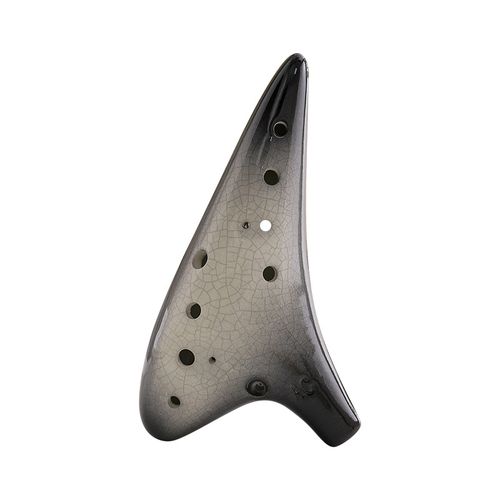
Welcome to the Eidolove Material Comparison class! While Plastic Ocarinas have a place in the beginner market due to their durability and low cost, the Ceramic Ocarina remains the undisputed champion for anyone seeking Performance Grade Ocarina quality.
Why is there such a huge difference in sound? This guide will use Acoustic Principles to reveal the four reasons why the Ceramic Ocarina Tone is superior.
I. 🧱 Material Density: The Foundation of Sustain and Projection
The first determinant of Tone Quality is the density of the instrument's material.
Plastic Absorption: Plastic (Polymer) is relatively light and flexible. As the airflow passes through, the body of the instrument absorbs and dampens some of the sound vibration energy. This results in short sustain and a "dull" or "flat" sound.
Ceramic Reflection: Fired ceramic is highly dense and rigid. This rigidity allows the Ocarina chamber to act as an efficient resonance box, maximally reflecting sound energy back into the chamber and out of the mouthpiece. This produces superior Sound Resonance and longer Sustain.
The Core: The high density of ceramic ensures excellent projection and sustain.
II. 👂 Complex Timbre: Rich Overtone Structure
A Warm Tone is not just about volume; it's about the complexity of the sound, specifically its Overtones structure.
Ceramic Chamber Effect: The internal surface of ceramic is often slightly textured compared to smooth plastic. When sound waves reflect inside the ceramic chamber, they generate a richer, more layered spectrum of overtones. These overtones are key to giving the sound its "warmth," "fullness," and "depth."
Plastic's Clarity vs. Sterility: Plastic tones often sound "cleaner," but they lack this complex overtone support, leading to a sound that can feel thin or sterile.
The Core: Ceramic creates a more complex overtone structure, which is the source of the Warm Tone.
III. 🔥 Firing Process: Stability and Consistency
The ceramic Ocarina is permanently formed through high-temperature kiln firing, granting it unmatched tonal stability.
Lasting Stability: Firing above $1000^\circ\text{C}$ creates a permanent ceramic structure that is less prone to shape changes due to temperature or humidity swings, ensuring long-term consistency in pitch and tone.
Moisture Management: Ocarinas generate condensation during play. Ceramic handles this subtle internal moisture better, avoiding disruptions to the airflow at the mouthpiece and maintaining stable tone quality over extended sessions.
The Core:High-temperature firing ensures ceramic maintains performance-grade sound in all environments.
🎉 Conclusion: The Eidolove Ceramic Series is the Tone Winner
If you are a serious learner committed to Performance Grade Ocarina quality and pursuing superior sound, Eidolove heartily recommends our Ceramic Ocarina series.
While plastic offers convenience and durability, it can never replicate the warmth, depth, and resonance provided by ceramic.